Larix sibirica
European Larch
Also known as: Siberian Larch
 Timber Grain
About this Timber
General Description
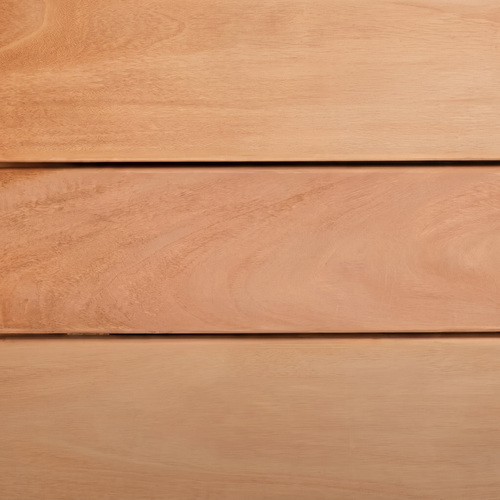
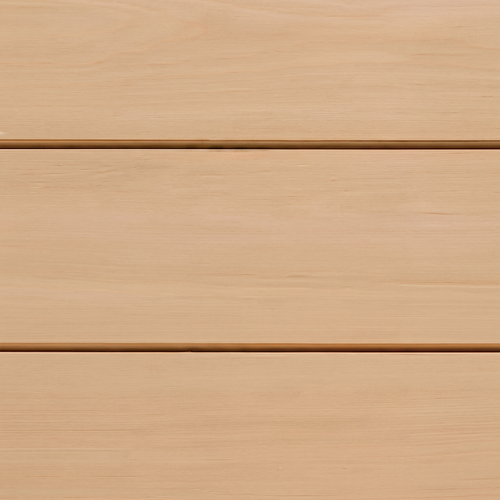
The wood is pale yellow-white in colour, with clearly marked and close annual rings. The wood grain is straight and not interlocked, contains tight knots and has a fine uniform texture. It is quite dense for a softwood due to a slow growing season.
The wood is moderately durable and the heartwood is resistant and sapwood moderately resistant to preservative treatment. Larch dries fairly rapidly with some degrade. It may be kiln dried very satisfactorily. There is small movement and some minor surface checking in exposed situations.
Working Properties
How This Timber Works
Works well with most hand and machine tools but knotty material can cause severe blunting of cutting edges. It saws and machines cleanly in most operations. Nailing causes splitting and pre-boring is essential. It takes stain, paint and varnish well.
Mechanical Properties
Larch is harder and tougher than most conifers and is used in preference when durability and strength are prime requirements.
Technical Data
Technical Specifications
*Air Dry Density (kg/m³) is an average indication only and actual values may vary. Refer to strength, shrinkage and durability classification tables for full details.
Reference Tables
Timber Classification Tables
Standard NZ classification tables for strength groupings, shrinkage and durability. This species is highlighted in each table.
| Strength Group | Modulus of Rupture | Modulus of Elasticity | Max Crushing Strength |
|---|---|---|---|
| S1 | 103 | 16300 | 52 |
| S2 | 76 | 14200 | 43 |
| S3 | 73 | 12400 | 36 |
| S4 | 62 | 10700 | 31 |
| S5 | 52 | 9100 | 26 |
| S6 | 43 | 7900 | 22 |
| S7 | 36 | 6900 | 18 |
| Strength Group | Modulus of Rupture | Modulus of Elasticity | Max Crushing Strength |
|---|---|---|---|
| SD1 | 150 | 21500 | 80 |
| SD2 | 130 | 18500 | 70 |
| SD3 | 110 | 16000 | 61 |
| SD4 | 94 | 14000 | 54 |
| SD5 | 78 | 12500 | 47 |
| SD6 | 65 | 10500 | 41 |
| SD7 | 55 | 9100 | 36 |
| SD8 | 45 | 7900 | 30 |
| Description of Shrinkage | Tangential | Radial |
|---|---|---|
| Very Low | 0 – 3.5 | 0 – 2 |
| Low | 3.5 – 5.0 | 2 – 3 |
| Medium | 5.0 – 6.5 | 3 – 4 |
| High | 6.5 – 8.0 | 4 – 5 |
| Very High | > 8.0 | > 5 |
| Grade of Durability | Fully Protected | Above Ground, Exposed | In-Ground, Exposed |
|---|---|---|---|
| Very Durable | > 50 | > 40 | > 25 |
| Durable | > 50 | 15 – 40 | 15 – 25 |
| Moderately Durable | > 50 | 7 – 15 | 5 – 15 |
| Non-Durable | > 50 | 0 – 7 | 0 – 5 |
Applications
Main Uses
Stock & Sizes
Availability
Sawn 32mm and 50mm thicknesses in a range of widths. Weatherboard, fascia, mouldings, TG&V and panelling products.
Quality Standard