Pinus radiata (Dually Modified)
Kebony
Also known as: Dually-modified Radiata Pine
 Timber Grain
About this Timber
General Description
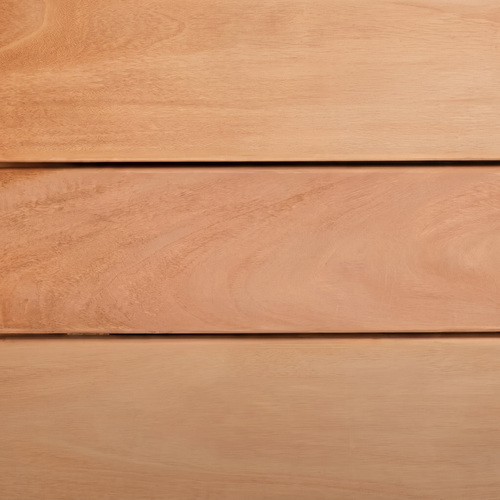
Kebony wood has a rich brown colour and after exposure to sun and rain the wood develops a natural silver-grey patina over time.
Kebony is impregnated with a biobased liquid that activates two modifications within the wood cell to boost strength and longevity. The liquid actively engages with OH-groups in the wood, reducing water sensitivity and enhancing durability against environmental factors. It also creates a polymer that serves as reinforcement, directly contributing to increased strength and hardness.
The combined modification, known as the Dually ModifiedT process, allows Kebony to go beyond tropical hardwood performance in a sustainable way.
Working Properties
How This Timber Works
This timber is hard like a hardwood. It cuts and drills cleanly and attains an excellent finish.
Mechanical Properties
The Dually Modified process provides enhanced strength, hardness and durability well beyond the base radiata pine, achieving performance comparable to tropical hardwoods.
Technical Data
Technical Specifications
*Air Dry Density (kg/m³) is an average indication only and actual values may vary. Refer to strength, shrinkage and durability classification tables for full details.
Reference Tables
Timber Classification Tables
Standard NZ classification tables for strength groupings, shrinkage and durability. This species is highlighted in each table.
| Strength Group | Modulus of Rupture | Modulus of Elasticity | Max Crushing Strength |
|---|---|---|---|
| S1 | 103 | 16300 | 52 |
| S2 | 76 | 14200 | 43 |
| S3 | 73 | 12400 | 36 |
| S4 | 62 | 10700 | 31 |
| S5 | 52 | 9100 | 26 |
| S6 | 43 | 7900 | 22 |
| S7 | 36 | 6900 | 18 |
| Strength Group | Modulus of Rupture | Modulus of Elasticity | Max Crushing Strength |
|---|---|---|---|
| SD1 | 150 | 21500 | 80 |
| SD2 | 130 | 18500 | 70 |
| SD3 | 110 | 16000 | 61 |
| SD4 | 94 | 14000 | 54 |
| SD5 | 78 | 12500 | 47 |
| SD6 | 65 | 10500 | 41 |
| SD7 | 55 | 9100 | 36 |
| SD8 | 45 | 7900 | 30 |
| Description of Shrinkage | Tangential | Radial |
|---|---|---|
| Very Low | 0 – 3.5 | 0 – 2 |
| Low | 3.5 – 5.0 | 2 – 3 |
| Medium | 5.0 – 6.5 | 3 – 4 |
| High | 6.5 – 8.0 | 4 – 5 |
| Very High | > 8.0 | > 5 |
| Grade of Durability | Fully Protected | Above Ground, Exposed | In-Ground, Exposed |
|---|---|---|---|
| Very Durable | > 50 | > 40 | > 25 |
| Durable | > 50 | 15 – 40 | 15 – 25 |
| Moderately Durable | > 50 | 7 – 15 | 5 – 15 |
| Non-Durable | > 50 | 0 – 7 | 0 – 5 |
Applications
Main Uses
Stock & Sizes
Availability
A wide range of 19mm thick vertical and horizontal weatherboard profiles as well as panelling for walls and ceilings. Also available in ex 50mm thicknesses in a range of widths.
Quality Standard